
Most of our clients are NRIs, so this is one of the most common questions we get: “When is the best time to send money to India?” or “What’s the best exchange rate to send money to India right now?”
Clients who have worked with us for a while already know our answer, but they still probe further: “I’d like your outlook on the Rupee versus the Dollar over the next few months. Is the Rupee going to depreciate further? How far do you think it will fall?”
Newer clients arrive with more urgency: “I need to transfer some funds from the US to India. Can you tell me when I should initiate that transfer? Is this the right time, or should I wait a while?”
Quick Answer
There is no reliable way to time the exchange rate, in the same way there is no reliable way to time equity markets. If you have a genuine need for the money in India, such as retirement, family support, or an investment goal, spreading your transfers over time reduces timing risk far more effectively than trying to guess the bottom. What matters more than the exact exchange rate on a given day is the interest rate you can earn once the money lands, and the tax treatment in your country of residence.

Read: NRIs wealth planning checklist
Best Time to Send Money to India
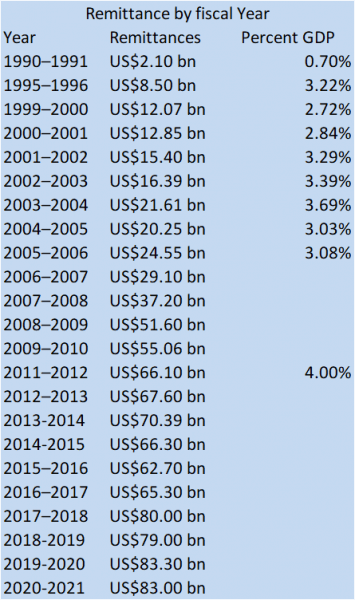
With India’s repo rate around 5.25% as of 2026, NRIs regularly ask us whether this is a good time to remit money for investment purposes.
A few figures to show the scale of what we are talking about:
- India remains the world’s largest recipient of remittances, and has held that position since 2008. According to the Economic Survey and PIB, inflows reached USD 135.4 billion in FY25, up from USD 69 billion back in 2017. That is nearly double in under a decade.
- India’s remittance inflows consistently outpace every other country, including China and the Philippines, the next largest recipients.
- The money transfer industry serving NRIs, including both traditional banking channels and newer fintech remittance apps, continues to grow at a healthy pace each year, driven partly by faster and cheaper digital transfer options that did not exist a decade ago.
Why Do NRIs Transfer Money to India?
- NRIs remit money to support their families in India. Inflation in India has historically run higher than in most developed economies, so consumption-driven remittances tend to rise steadily over time. See our piece on NRI gift taxation issues if you are sending money as a gift rather than for your own investments.
- NRIs send money to invest, primarily into bank deposits and property. Some of this is driven by genuine financial planning, and some by an emotional pull toward retaining roots in India, with the hope of eventually returning to benefit from these investments.
Note: Since 2011, the RBI has deregulated the interest rate banks can offer on NRE (Non-Resident External) accounts, allowing banks to set their own competitive rates rather than a fixed ceiling. As of 2026, NRE FD rates across major banks range roughly from 6% to 7.35% depending on the bank and tenure, making these deposits a genuinely competitive option compared to many developed-country savings rates.
Interest on NRE FDs is tax-free in India. Check: Tax Rates for NRIs on Indian Income
Now the Real Question: Is It the Right Time to Send Money to India?
Reasons that favour transferring money to India now:
- NRIs in many developed countries continue to face lower deposit rates than what Indian banks offer NRIs. Even after recent rate cuts globally, a meaningful gap remains between what you might earn on savings abroad and what an NRE or NRO FD in India can offer.
- Since NRE deposit principal and earnings are fully repatriable and convertible, this remains a reasonable option for money you genuinely intend to hold for one to five years, rather than money you might need back in foreign currency at short notice.
“NRE and FCNR accounts can be held jointly with a close relative in India on a former-or-survivor basis, so your relative can help operate the account even when you cannot be physically present for a transaction.”
Read: Can NRE FD Continue after return to India?
Different Ways to Send Money to India
There are three major ways NRIs send money to India from abroad.
Wire Transfer. This electronic money transfer moves funds directly into an Indian bank account. Bank-to-bank transfers typically use the SWIFT network, which allows participating banks worldwide to securely share transaction information. Most major Indian banks, including ICICI, Axis, HDFC, and SBI, offer inward remittance services through this network. You will need to share your bank details, the recipient’s bank details, and a SWIFT code to complete the transfer, along with documentation confirming your identity and the purpose of the transfer. Bank charges typically apply on both ends.
Foreign Currency Demand Draft. A demand draft is a pre-paid negotiable instrument issued in a specific foreign currency by a bank. It is often cheaper than a wire transfer, since you are only charged the issuing fee, and it can be reissued if lost. The trade-off is time: demand drafts generally take longer for the recipient to receive and clear compared to a wire transfer. This suits situations where you want to save on cost and are not in a hurry.
Online Money Transfer Service Providers. Dedicated remittance platforms and fintech apps have become the dominant choice for many NRIs in recent years, typically offering better exchange rates and lower fees than traditional bank wire transfers, along with faster processing and clearer tracking of where your money is at any given moment.
The Real Risk in Transferring Money to India Right Now
- The biggest genuine risk is exchange rate volatility itself. The Rupee has shown periods of weakness against major currencies, and predicting exactly when it stabilises is not something anyone can reliably do. Rupee depreciation works in your favour if you are converting foreign currency into Rupees for use in India, since you receive more Rupees per unit of foreign currency, but it cuts the other way if you eventually need to convert back.
Dollar vs Indian Rupee Chart

Historical illustration of Dollar-Rupee movement. Always check the current live rate before initiating any transfer.
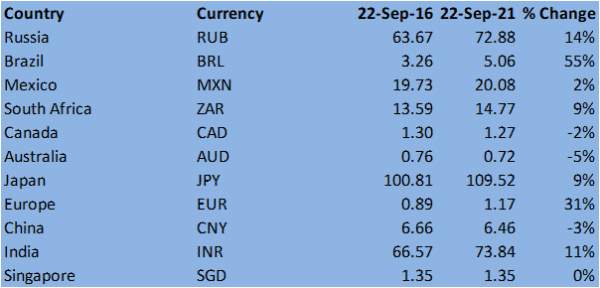
Dollar vs Other Currencies, 5-Year View
The Indian Rupee has historically performed relatively better than several other emerging market currencies over multi-year periods, even during phases of depreciation against the Dollar specifically.
Euro vs Indian Rupee Chart

- While FCNR and NRE returns are tax-free in India, they may still be taxable in your country of residence depending on local rules, in some cases at rates as high as 55% for high earners in certain jurisdictions. This can meaningfully reduce your actual net return. Always confirm this with a tax advisor in your country of residence before assuming the Indian tax-free status is the full picture.
- Rules and caps on foreign currency investments change periodically under FEMA, RBI regulations, and related banking guidelines. Staying informed, or working with an advisor who tracks these changes for you, matters more than it might seem in a given quiet year.
- Mis-selling remains a genuine risk for NRIs, particularly during periods of currency volatility when people feel more urgency to “do something” with their money. Being told a product is “guaranteed” or “the best time ever” should always prompt a second opinion before you commit.

Read: Best Investment Options for NRIs
The Behavioural Trap: Trying to Time the Untimeable
Currency depreciation is a normal feature of higher-inflation economies. Over the long term, a simple rule of thumb holds reasonably well: Indian currency depreciation tends to roughly track the gap between Indian inflation and inflation in the country you are comparing it to. For the US, this gap has historically averaged somewhere around 4% to 5% annually, though short-term moves can be driven by very different factors like global liquidity conditions or risk sentiment.
Timing the exchange rate is exactly like timing equity markets: it sounds achievable in hindsight, and it is genuinely very difficult in real time. The longer you hold money abroad waiting for a “better” rate, the more you give up in interest you could otherwise be earning, since interest rates in most countries are themselves connected to that country’s inflation trajectory.
If your real question is “when should I actually send money to India,” our honest answer has not changed in years: if you are planning to retire in India, or have a genuine ongoing need there, transfer gradually over time rather than waiting for a single perfect moment. This spreads your currency risk across multiple points, the same principle behind rupee-cost averaging in equity investing, rather than betting everything on one guess about where the Rupee is headed next.
Trying to decide when to remit money to India?
We help NRI clients build a remittance and investment plan that does not depend on guessing currency movements correctly. Let’s talk about your specific goal, whether it is retirement, family support, or building an India-based portfolio.
Each country has its own regulations and tax implications for its NRI residents, and these genuinely differ enough that generic advice can miss something important in your specific situation. Do not act on currency or remittance timing without first checking these details for your country of residence, and ideally with a qualified advisor who understands both sides of the transfer.
Want a second opinion before your next transfer?
We work with NRI clients across the Middle East, UK, US, Singapore, and Australia to plan remittances and India-based investments without betting on currency timing.
Frequently Asked Questions
Is there really a best time to send money to India based on the exchange rate?
Not reliably. Timing the exchange rate is similar to timing equity markets: possible to explain in hindsight, but very difficult to execute consistently in real time. If you have an ongoing need for money in India, spreading transfers over time reduces the risk of getting a single transfer badly wrong, rather than waiting for one perfect moment.
How much does India receive in remittances each year?
India has been the world’s largest recipient of remittances since 2008. According to the Economic Survey and PIB, India received USD 135.4 billion in FY25, up from USD 69 billion in 2017, reflecting both a growing NRI population abroad and rising remittance amounts per sender.
Are NRE fixed deposit returns really tax-free?
Interest earned on NRE and FCNR deposits is tax-free in India. However, this income may still be taxable in your country of residence depending on local tax rules, in some cases at rates significantly higher than what you might expect. Always confirm the tax treatment in your specific country of residence before assuming the Indian tax-free status tells the whole story.
What is the fastest way to send money to India?
Online money transfer service providers and fintech remittance apps are typically the fastest and most cost-effective option today, often beating traditional bank wire transfers on both speed and exchange rate. Bank wire transfers remain reliable but usually involve higher fees and a comparatively less competitive exchange rate. Foreign currency demand drafts are the slowest option and suit situations where cost matters more than speed.
If you would like to discuss your personal finance with us, check this.
Feel free to ask any question or share your experience about transferring money to India in the comment section.


Can i transfer euro to india nowAs the ukranian n Russia war is happenng
Hi Vishanu,
Yes you can.
I want to transfer money from MYR to INR. is this the right time?
Hi Rajesh,
As per my knowledge one really cannot time this thing.
When is a good time to remit money to India?
Hi Anuj,
As per my knowledge,
You cannot really time this thing, but now is a good time to remit money to India.
I am planning to transfer some good amount to India. Is this the right time or I should wait? Looks like INR is dropping below 73 now. My question is – Will it further drop or hike based on t he current trend?
there are chances for 75 may be within one month which is better than send and deposit FD.
I want to send money to India from UAE should i transfer today as rate is dipping?
Considering current situation, I thought INR will become stronger but don’t see that happening. also situation in US is also not so good.. do you think INR getting stronger in coming days/weeks? If I check predictions on various sites I see INR getting weaker and weaker (going upto 78INR per 1USD).. does that make any sense?
Don’t predict things in life or finance…
I agreed but the same time there is no any sign to appreciate INR at least next one year.
Given the current INR to US dollar exchange rate…would it be good to remit UD dollars to India?
Hi Shubham,
We normally recommend it should happen on a regular basis – no one can “time” that it’s the best time to send money.
Always you want to look dollar rates to send the money to India, better every three months when the dollar getting appreciated. This will give better return than FD interest rate
How can an NRI invest in Govt of India debt bonds?
Hi Chandan,
You can consider Gilt or Gsec Mutual Funds.
Can you explain what is Gilit and Gsec
I have practically experienced that we can never time the exchange rate and all I do now is just transfer the amount on regular basis without worrying about exch rate and found this option much more effective.
But seen many guys discussing, INR down by 5, 10 or 50 paisa this week and let’s wait for more dip in coming days.
Hi Krish,
Your strategy is much better than guys who try to time the foreign exchange rates 🙂
I am NRI. My strategy is waiting to look the financial market. But we should calculate the differences. Example, now the interest rate is too low…. other side because of weak economy the dollar appreciation now a days is normally good. So, every three month you can plan to transfer and with this strategy I am always getting better income.
I have already Nro account so and not opened Nre a/c still . Urjently I came back to india . So can I have deposit above 15 lac into Nro a/c from FOREIGN . Is it any prblm and enquiry facing in income tax . How much pay tax
Hi Irs,
This will depend on the country of your residence but I don’t think that should be an issue in India as you earned income abroad.
I am NRI and having NRE account can deposit in foreign currency only and handling the money in India will be in INR.
NRO account holder can handle the deposit both INR and foreign currency and you don’t need a separate domestic account.
Hi Hemant,
Thanks for sharing this brilliant post with such relevant data.
I completely agree with “you should gradually keep transferring money. Timing the exchange rate is like timing equity markets – which is impossible. “
Thanks Amit for appreciating our effort. 🙂